
Memory is an essential mental capacity necessary for leading a meaningful life (Bauer & Fivush, 2014; 2013). Possessing a competent memory is very essential in childhood as children are exposed to a great deal of new information which they are required to learn about, retain and recall when need be, as memory capacity is regularly assessed starting from a young age in school settings (Jolley, 2010). In other occasions, such as clinical and judicial setting, ability to remember past event and recall them accurately is very crucial. From early 1980s, there has been a great change in the society’s recognition and sensitivity to issues of abuse and violence suffered by children and these changes had led to allowing children to give their testimony regarding their experience of these cases.
There have been some debates about the reliability of children’s testimonies knowing that children’s ability to recall past events is quite limited compared to adults (Bruck, & Ceci, 1999). Previous studies have shown that deficits in children’s memory is partially due to shortage in storage and encoding process, however, the main influence on children’s memory difficulties is based at the retrieval stage as younger children compared to older children experience difficulty in creating their personal retrieval strategies (Flavell, Beach & Chinsky, 1996 as cited in Barlow, Jolley, & Hallam, 2011). However, there are other issues that are associated with children’s memory and what can influence their recall and these include children being vulnerable to use of leading questions, feeling of pressure when being interrogated by an adult, strain in organising their recall and their lack of restriction in their thoughts (Jolley, 2010).
The limitations of other techniques that helps facilitate children’s memory recall has led to the use of drawing as memory aids in various settings. Drawing is believed to help children generate their own cues during recall process and it also helps enhance accuracy in recall by children. However, four methods have been implemented experimentally to explore the effectiveness of drawing as memory aids for children and these includes staged events, emotional events, Item recall tasks and recalling from video.
Assessing the importance of memory and issues with the limitations of children’s accurate recall, several researchers have investigated various ways in which memory recall can be enhanced in children such as use of physical props, questioning style (Jolley, 2010) behavioural re-enactment, and practice narratives (Brubacher, Roberts & Powell, 2011). Asking direct questions specific to an experienced event has been found to enhance memory recall in children compared to the use of free recall. This is because the use of direct questions is considered to provide some level of cue (external) that can aid the recall process especially if event has a feeble trace. Direct questions also help in organisation of memory (Eisen, Quas & Goodman, 2002). However, the use of direct question has some limitations similar to the use of leading question as it can lead to the recall of inaccurate or false information. Children are very vulnerable and direct questions from an interviewer can make them feel pressured to give an answer even if they do not remember anything at that instant. Other researchers have also explored if the use of physical props such as toys, and dolls can aid memory recall and findings has revealed that the use of physical props can be useful aid for memory recall as some behaviours which might not be expressed verbally can be captured in their behavioural response in using the toys to act out the scene (Salmon, Bidrose & Pipe, 1995).
However, the limitations of the use of physical props is that children can easily be distracted, and they can end up focusing more on the toys as an object to express their fantasy which in turn can lead to recalling information that are inaccurate (Gross & Hayne, 1999; Salmon, 2001). Both behavioural re-enactment and practice narratives has also been shown to aid memory recall, however their limitations are that they can lead to missing out important details of the event or end up misleading the interviewer into making assumptions and subjective interpretation of what the child interviewee is trying to say (Otgaar, Van-Ansem, Pauw & Horselenberg, 2016).
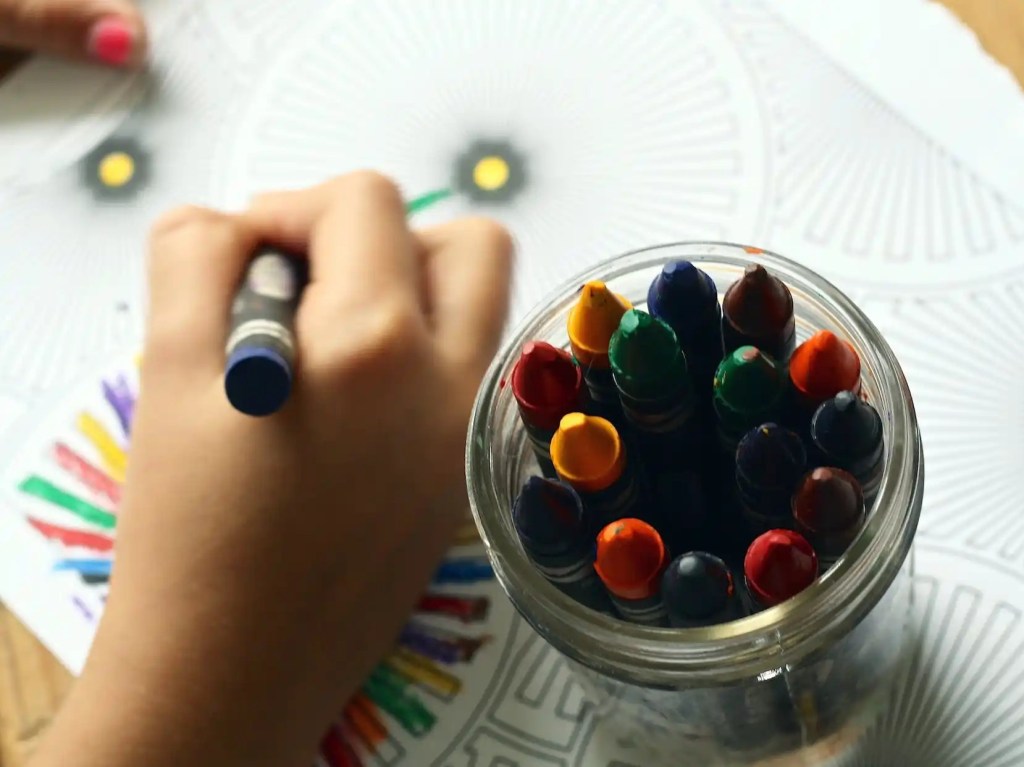
Due to the limitations of the use of physical props, questioning style, behavioural re-enactment and practice narratives as memory aids, researchers have suggested that drawing can be more beneficial both in specific and non-specific terms to enhance memory recall in children. The benefits of drawing have been linked to the fact that drawing can act as a way of encouraging the child to generate their own cues to aid the recall process and in that way, a child can tend to focus on the area that is of more interest to him or her and explore deeper thereby easing the pressure of being asked direct questions (Butler et al., 1995; Gross & Hayne, 1998, 1999). Children are quite vulnerable and can easily feel intimidated when an adult is asking them questions about an event. Hence, the use of drawing can help ease their anxiety as they will feel more in control by talking about what they have drawn in relation to the event (their own cue) than focusing on the pressure of having to generate an answer to direct questions by the interviewer (Butler et al., 1995). Drawing also helps to enhance the bond between the interviewer and the child as drawing is seen to be an activity enjoyable by children especially children within the age range of 2 to 12 years old. Therefore, engaging in an enjoyable activity with the interviewer will help keep the child relaxed and comfortable enough to be able to recall more and talk freely (Jolley, 2010). Drawing has also been suggested to help the child stay focused as they will continuously be able to refer back to their drawing when they are going off track from verbal explanation, whereas in a standard interview, the interviewer have to constantly be the one to do the refocusing when the child is drifting away. In relation to time constraint associated with standard interview, drawing can help extend the interview time as it leads to giving enough time to the child involved to recall freely as much as possible using what he or she has drawn. Hence, the child will not feel in a hurry to give a response which in turn can help the child recall as accurate as possible using own words and cues.
Drawing has been discovered to be beneficial both specifically and non-specifically in regards to memory aids and the use of the four experimental approaches (staged events, emotional events, Item recall tasks and recalling from video) have been used to explore whether drawing might aid memory recall in children.
In regards to staged events, Butler, gross & Hayne (1995) conducted a study using a staged event model to investigate if drawing aids memory recall in children. The experiment was in two stages as the first involved a group of 5 to 6 years old children who were taken for a school trip to a fire station. Their memory recall about their experience at the fire station was tested a day after. The second stage involved a school trip again to a fire station, but this time with a group of 3 to 4-year-old children together with another group of 5 to 6 years old children. Their memory recall was tested a month after their trip as each child was allocated to a recall group of either tell only (verbal recall only) or draw and tell group. Findings from this research showed that 5-6 years old could recall more when asked to draw the event, whereas drawing had no influence on accuracy and completeness of reports for 3 to 5 years old. However, the beneficial effect of drawing on memory was only evidenced if children were asked direct questions about the event which has raised some reproving notes as in the case of real- life setting, interviewer may not have enough knowledge about the event to provide direct questions. The possible limit to these findings is that drawing was not beneficial for the younger group, which goes to show that quality of drawing may have an impact on this, as older children may have a higher representational drawing quality which might give better and clearer cue than younger children (Jolley, 2010).
Butler et al (1995) study was supported by Gross and Hayne (1999) study who examined children’s recall (5-6 years old) of their visit to a chocolate factory either a day after their trip or six months after, either by recalling freely or directed recall. After a period of one year all the children were interviewed about their trip and were assigned to either recall verbally only (tell only) or draw and tel. Findings revealed that drawing enhanced more accurate recall in all the interview and only aided free and directed recall. In contrast, Salmon and Pipe (2000) study on 5 years old children who were asked to recall standard routine health assessment either in a draw and tell group, tell only or use of physical props shows that drawing did not aid recall at any point and after a delay of one year, children assigned to the draw and tell group recalled lesser than those in the tell only group and those assigned to the physical props groups. However, it can be argued that the difference in these findings is because while Butler et al (1995) was a study of unique or specific event aswell as Gross and Hayne (1999) study, Salmon and Pipe (2000) study was a routine health check as Hudson and colleagues has shown children can easily get confused and get information mixed up when recalling a routine event especially after a delay before recall (Hudson, 1990, Hudson, Fivush & Kuebli, 1992 as cited in Jolley, 2010).
Furthermore, findings from drawing and recalling a unique event is very advantageous in real life setting such as eye witness testimony where children are asked to report their experience of an unusual situation such as abuse, domestic violence and crime scenes. Recalling such events can be quite traumatic for children as it can evoke some emotional response in the child. It is therefore very useful for clinicians and interviewers to know if drawing can aid memory recall of emotional events. Gross and Hayne (1998) conducted a study to test for the effect of drawing on recalling emotional events using a group of 3 to 4 years old and 5 to 6-year-old. Children were grouped into a tell only group and draw and tell group and were asked to recall previous personal emotional experience which can be sad, happy, scared or angry. Children’s report was confirmed by their parents and findings from this study showed that for both age groups, drawing aided recall across all the moods. Findings also revealed that the effect of drawing was not affected by individual differences (temperament and expressive vocabulary).
However, although parents were asked to verify their children’s report for the emotional events, it can also be argued that delay may also affect parent’s memory and for events where parents do not have direct access to the event in detail for example if the child decides to recall a nightmare, verification by parents can be limited in that aspect. This study findings were supported by other research including those conducted by Salmon, Roncoloato & Gleitzman, 2003 and Wesson & Salmon, 2001. Whose findings revealed that asking children to draw and talk about emotional event they experienced personally can aid recall.
However, Davison and Thomas (2001) argued that children’s drawing can most likely be schematic which implies that they are more likely to show general features typical to an event instead of focusing on specific details, hence the recall of those generic items in the drawing session can lead to more accurate recall during the scoring system and make the drawing group more advantageous. Addressing the issue of generic knowledge in children’s report within the clinical and judicial interview is very vital. Hence, item recall task is another method used to address this concern. Davison and Thomas (2001) conducted a study where children were presented items on a board and were later asked to recall after the removal of the items. Children were assigned to either draw and tell group or tell only. Findings from this studies showed that between the two groups, there was no significant difference in the number of recalled items and in some studies the drawing groups recalled less. The reason for this finding could have been because children are more likely to recall event based experience rather than been presented with unrelated or isolated items. This concern was further addressed by asking children to recall from video information.
Jolley, Apperley & Bokhari (2002) conducted a study where an educational video on gravity was presented to a group of children who were asked a day after to recall from memory what they have watched from the video. They were assigned to one in three groups of either draw and tell, draw then tell or tell only. Findings from this study revealed that children assigned to the draw then tell group recalled higher than the other two groups respectively. This finding shows that drawing enhances recall of actions in specific situations. Barlow, Jolley & Hallam (2011) conducted similar study using video approach where a group of children were presented with a video clip of a novel event and were later interviewed the next day based on four groups of either draw and tell only, tell only, interactive tell only and interactive draw and tell groups. Findings from this study showed that there was a higher recall of correct information for items by the interactive draw and tell groups than the other groups. Their findings also showed that drawing enables the interviewer to ask questions which are interactive and will therefore enhances the children’s ability to recall accurate item information supporting Jolley, Apperley & bokari (2002) studies.
In conclusion, due to the deficits in children’s memory which is due to shortage in storage, encoding and retrieval process, drawing has been found to have a positive impact in aiding children’s memory recall. The use of four methods including staged events, emotional events, Item recall tasks and recalling from video to test for the effectiveness of drawing as memory aids have revealed that drawing helps children to generate their own cue during interview process, helps to reduce anxiety related to interview condition, helps accurate memory recall and helps with structuring of memory during recall. Findings from studies has shown that drawing enhances recall of unique events which is very advantageous in real life settings such as eye witness testimony, clinical and judicial setting. However, drawing has not been found to be an effective memory aid for routine, non-emotional or unrelated events. Other studies have also reported that drawing as memory aid was not beneficial for the younger age. Hence, more research is needed on the impact of age, culture and individual differences, and how these impacts on the effectiveness of drawing as memory aids in children.




 Easy Psychology
Leave a comment